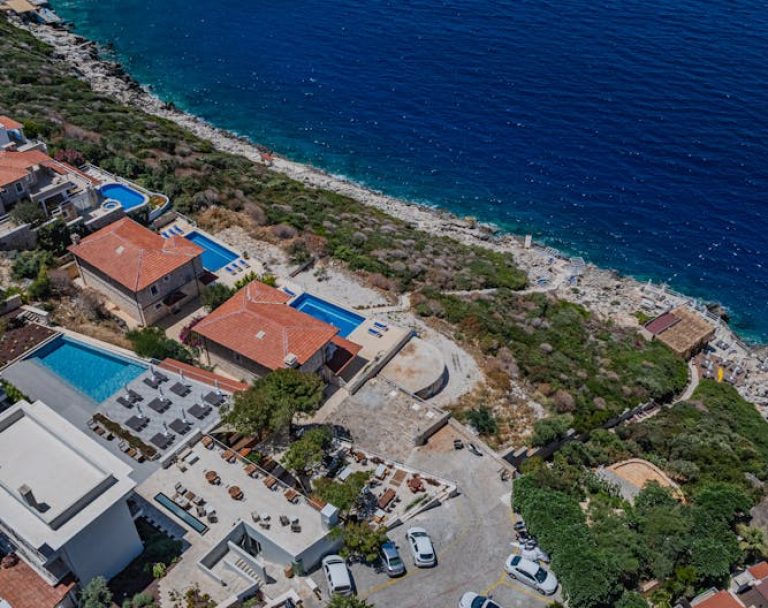
Foreign investors who purchase real estate in Croatia or enter projects such as hotels, marinas, and luxury villas often focus primarily on location and return potential. However, they soon realize that taxation is just as crucial for the overall investment outcome. The tax framework is not the same for every investment structure: a private individual purchasing an apartment for rental income is treated differently from a company developing a project, and differently again from an investor investing through an international group. In investments involving tourism and coastal projects, the tax structure is often just as important as the location itself.
How investors differ in practice: individual, company, or fund
When investing in real estate, one of the first questions is whether the purchase should be made as a private individual or through a corporate entity. This decision affects several aspects:
- the type and level of tax that will apply (e.g., personal income tax vs. corporate income tax)
- the ability to recognize certain costs and deductions
- the taxation of rental income, capital gains, and potential resale
- the application of VAT in transactions (depending on the taxpayer’s status and the type of property)
For projects with higher transaction volumes (such as hotels or marinas), the investment structure is often corporate because it allows easier management of costs, financing, and the tax treatment of profits. However, this is not a universal rule.
Real estate transfer tax and situations where VAT applies
When acquiring property in Croatia, the key distinction is between transactions that are subject to real estate transfer tax and those that fall under the VAT system.
In practice, the determining factor is usually whether the investor is purchasing:
- a newly built property from a VAT-registered entity, or
- a “used” property from a party outside the VAT regime.
For investors, it is important to understand that VAT can significantly affect project liquidity, but it can also create the possibility of input VAT deduction when the conditions are met and when the property is used for taxable activities.
In tourism projects or commercial leases, VAT becomes an operational issue, not merely a one-time cost at the moment of purchase.
Corporate income tax: when investing through a company makes sense
If an investor establishes a company in Croatia or operates through an existing one, profits are generally taxed under corporate income tax.
A key factor is determining:
- which expenses qualify as tax-deductible costs
- how depreciation, interest, management fees, and maintenance costs are treated
In real estate projects, the most sensitive items often include:
- financing costs (interest rates, bank fees, intercompany loans)
- management and advisory costs (type of service, documentation, arm’s-length pricing)
- investments in reconstruction and equipment (distinguishing between operating expenses and capital expenditures)
- payments to related parties, licensing fees, and management fee structures
High-quality documentation and well-structured contracts are essential to avoid tax base adjustments and to ensure that certain expenditures can be treated as allowable deductions.
Withholding tax: dividends, interest, and payments to non-residents
When a Croatian company pays certain types of income to a non-resident, withholding tax may apply.
This most commonly concerns payments such as:
- dividends
- interest
- fees for certain intellectual property rights or advisory services
In practice, several factors determine the final tax treatment:
- who the beneficial owner of the income is
- the country of residence of the investor and whether a double taxation treaty exists
- the applicable domestic tax rate and whether it can be reduced under a treaty
- whether tax residency documentation can be provided before payment
In reality, this is not only about the tax rate but also about the process. Timely preparation of tax residency certificates and correctly defining the nature of payments (for example, whether they are service fees or royalties) often determines whether Croatia has taxation rights or whether taxation is fully shifted to the recipient’s country of residence.
Avoidance of double taxation: what investors most often overlook
Double taxation treaties exist to prevent the same income from being taxed twice, but they do not apply automatically.
Investors must understand the mechanism: typically either
- the tax in the source country is reduced (e.g., through a lower withholding tax), or
- tax paid in one country is credited in the other country.
Common mistakes in practice include:
- assuming that the treaty applies automatically without providing documentation or filing requests
- inconsistencies between the transaction description in contracts and how tax authorities interpret it
- overlooking that certain types of income have specific treaty rules (for example, dividends or certain service fees)
For higher-value investments or more complex ownership structures, setting up the structure properly in advance becomes part of risk management, just like conducting legal due diligence on the property.
Permanent establishment: when presence in Croatia changes the tax picture
A foreign investor can operate in Croatia without establishing a local company, but this raises the key question of whether a permanent establishment (PE) is created.
If activities in Croatia develop to the level of a permanent establishment, a portion of the investor’s profits may become taxable in Croatia, regardless of where the investor’s headquarters are located.
In real estate projects, potential risk points include:
- a permanent team or office managing rental operations locally
- continuous service provision on-site through authorized personnel
- development projects involving long-term construction and project management
This is an area where the business model—who contracts, who invoices, and who manages operations—directly affects the tax treatment of foreign investment.
Costs, deductions, and “net return”: tax details that change the investment calculation
Investors naturally focus on gross income, but the actual return is determined by the net result: income minus operational costs, taxes, and other charges.
When planning an investment, it is useful from the outset to map:
- which costs will be tax-deductible and which will remain non-deductible
- how maintenance expenses are distinguished from value-enhancing investments
- whether there are opportunities for lawful tax optimization through financing structures
- how the exit strategy is planned: sale of shares, sale of the property, or refinancing—since each scenario involves different tax consequences
Once VAT, corporate income tax, and withholding tax are included in the equation, the difference between a “good opportunity” and an excellent investment often lies in the details: documentation, contractual provisions, correct classification of payments, and alignment with double taxation treaty rules in relation to the investor’s country.
The way profits are later distributed as dividends or reinvested into new real estate projects in Croatia—for example by selecting attractive developments in cities such as Zagreb and Zadar—can further shape the overall investment outcome.