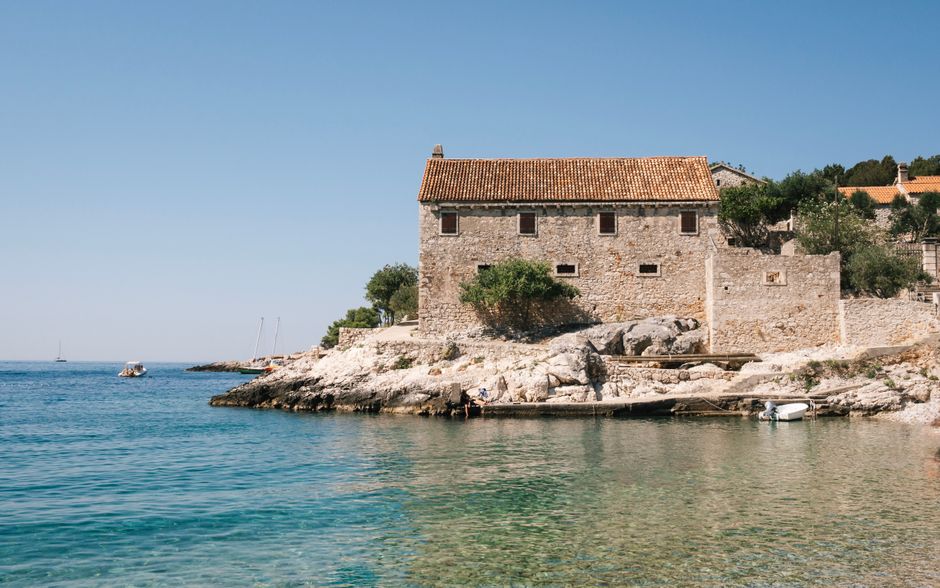
Foreign investors are increasingly viewing Croatia as a market where a luxury villa can serve multiple purposes: private use, tourist rental income, and long-term capital preservation. Properties on the Adriatic coast are particularly sought after, combining attractive locations, proximity to the sea, developed infrastructure, and strong demand for high-quality accommodation during the tourist season.
Buying a villa in Croatia is not merely an emotional decision connected to the Mediterranean lifestyle. For many international buyers, it is a strategic investment in a property that can fulfill several functions: a family holiday home, a prestigious second residence, a tourist rental property, or an asset to be passed on to future generations.
Croatia as a Safe and Recognizable Real Estate Market
One of the reasons Croatia attracts foreign buyers is its position within the European Union. Citizens and legal entities from EU member states may acquire ownership rights to real estate in Croatia under the same conditions that apply to Croatian citizens, with certain exceptions prescribed for specific categories of land. Buyers from non-EU countries generally need to verify reciprocity requirements and, in some cases, obtain approval from the competent ministry.
This legal framework provides investors with a clearer purchasing process. When acquiring a villa, seaside house, or luxury property in a prime location, it is essential to verify clean title deeds, building and occupancy permits, access roads, utility connections, and the actual condition of the property. This is why foreign buyers often seek professional assistance from agencies familiar with the local market that can filter property listings before viewings, especially in the luxury real estate segment.
Why Seaside Villas Are in High Demand
A villa by the sea has a value that cannot easily be replicated. Land in the best locations is limited, and high-quality new developments in the first or second row to the sea often find buyers quickly. Investors are not focused solely on square footage, but on the overall experience: sea views, privacy, swimming pools, architecture, distance from the beach, and access to amenities.
A house with a pool in a quiet coastal village can be just as attractive as a modern villa near a popular marina or historic town center. The difference lies in the investment strategy. Buyers targeting tourist rentals typically seek locations with proven demand, while those purchasing a property for personal holidays often prioritize discretion, landscape, and reduced exposure to crowds.
Tourist Rentals as an Important Investment Motivation
Croatia has a strong tourism identity, and luxury villas occupy a special position within the private accommodation sector. Guests are willing to pay premium prices for properties that offer privacy, a swimming pool, sea views, multiple bedrooms, an outdoor kitchen, parking, and proximity to the sea. As a result, purchasing a villa can be an attractive option for investors who wish to combine personal use with rental income.
For this type of strategy, it is not enough to consider only the purchase price. It is equally important to assess seasonality, operational costs, pool and garden maintenance, booking management, cleaning services, property categorization, and tax obligations related to rentals. A villa that is architecturally appealing, functional, and easy to maintain often achieves a stronger market position than a larger house requiring constant repairs.
Location Determines Long-Term Value
In the luxury segment, location remains the most important factor. Investors pay close attention to the micro-location: whether the property faces the sea, whether it offers unobstructed views, its distance from the airport, the availability of mooring facilities, transport connections, and the surrounding environment.
An attractive property does not necessarily mean the lowest price. In the premium market, the more important question is whether a similar villa could realistically be found again in the same position. If the property combines a rare location, quality construction, and proper documentation, the investor gains an asset with stronger resilience to market fluctuations.
Buying a Villa and Tax Obligations
When purchasing real estate in Croatia, it is important to understand the basic tax procedures. Real estate transfer tax amounts to 3% when this tax regime applies, while VAT may apply to certain new developments, depending on the seller’s status and the nature of the transaction.
The tax obligation arises at the moment the contract or another legal act transferring ownership of the property is concluded. Once the agreement is notarized, the notary public is required to submit a copy of the document to the Croatian Tax Administration. The Tax Administration then issues a tax decision, and the taxpayer must pay the assessed tax within the prescribed deadline, usually within 15 days from receipt of the decision.
These details are particularly important for foreign buyers because timely preparation of documentation reduces the risk of delays. In addition to taxes, buyers should also plan for notary fees, legal due diligence, agency commissions, translation services, banking fees, and future property maintenance costs.
The Role of Professional Mediation
Foreign investors rarely purchase a luxury villa based solely on photographs. Before making a decision, they seek verified information, realistic market assessments, and professionals who understand the difference between a well-presented house and a genuinely high-quality property. Agencies specialized in luxury real estate on the Adriatic coast, such as Best Real Estate, help buyers compare locations, recognize investment potential, and organize the purchasing process professionally.
The best villa is not always the largest or the most expensive. For one investor, the ideal property may be a modern house with a pool near the sea; for another, a traditional stone villa in a peaceful village; and for a third, an exclusive property with panoramic views and strong tourist rental potential. The true value lies in the combination of location, documentation, construction quality, and how well the property aligns with the buyer’s personal and financial goals. This is why it is essential to verify property ownership and legal status at an early stage of the process.