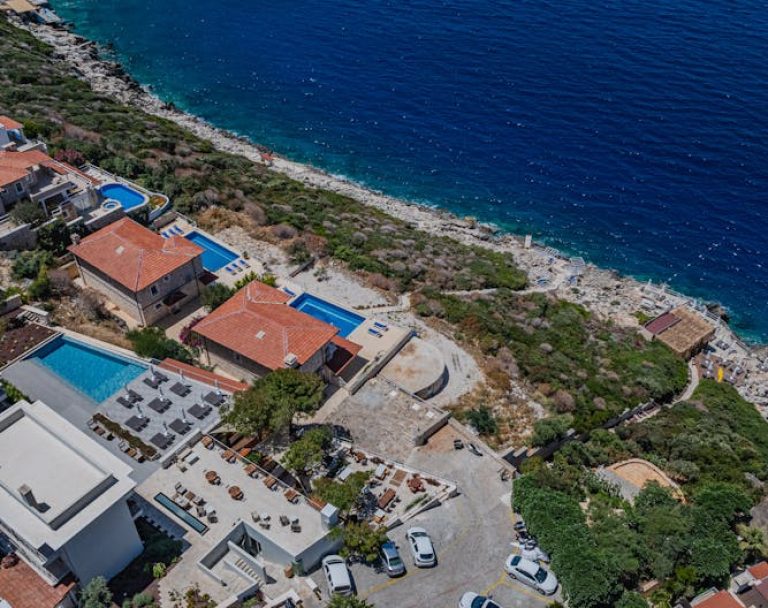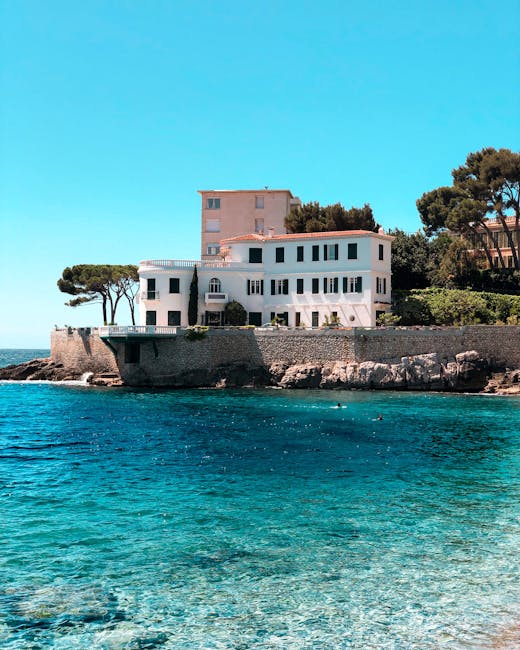
In a market where rising living costs, weakening purchasing power, and changing interest rates dominate daily conversation, luxury real estate is often viewed differently from a standard apartment or family home. While inflation reduces the value of idle cash, luxury properties generally retain their appeal because they are defined not only by average property prices, but also by the rarity of the location, construction quality, privacy, and long-term demand.
This is precisely why the relationship between inflation and the value of luxury real estate is not straightforward. In one part of the property market, higher inflation may slow down buyers who rely on financing, but in the premium segment it often strengthens interest among those seeking to protect their capital through tangible and limited-availability assets.
Why Inflation Changes the View of Real Estate Investment
Inflation does not operate solely through rising prices in stores. It also changes how investors assess asset security. When the value of money declines over time, many look for investment models capable of preserving the real value of capital. In this context, quality real estate becomes more than just a place to live; it becomes a form of wealth protection.
This is even more pronounced with luxury properties. Such an investment is tied not only to square footage, but also to a prestigious micro-location, views, architecture, level of amenities, and limited supply. Whether it is a seaside villa, a penthouse in the city center, or an exclusive apartment at a highly sought-after address, market value often withstands inflationary pressure better than average-market properties, especially in the luxury real estate category.
The Luxury Segment Does Not Behave Like the Rest of the Market
The average market is highly sensitive to financing availability. When interest rates rise, more expensive loans reduce the number of buyers and can slow market activity. This particularly affects standard apartments or houses purchased primarily to solve housing needs. In this category, decisions often depend on monthly installments, household income, and the general economic standard.
Luxury real estate, however, more often attracts buyers with substantial capital or those looking to diversify assets. Such buyers depend less on banks and focus more on long-term value growth, exclusivity, and the ability to preserve wealth through tangible assets. As a result, during inflationary periods the premium segment can show greater resilience, even when the broader real estate market becomes more cautious.
What Actually Preserves the Value of Luxury Properties
Not every expensive property is automatically a quality investment. The long-term value of luxury real estate usually depends on several key elements.
The first is location. A property in an attractive part of the Adriatic coast, in a historic city center, or in an area with limited future development has a completely different potential from a property that is simply priced high. The second is construction quality. Premium materials, energy efficiency, privacy, and a functional layout directly influence market perception.
The third factor is rarity. Luxury is not a mass-market product. If supply is limited while demand remains stable or increases, prices are more likely to hold their value and continue growing. This is precisely where the premium segment demonstrates a strength that standard properties often lack.
Croatia and the Growing Interest in Premium Locations
For Croatia, it is particularly important that the luxury segment does not rely solely on domestic buyers. The Adriatic coast, prestigious urban zones, and exclusive villas attract international demand, which further supports prices in the most sought-after micro-locations. When the same property appeals to a domestic investor, a foreign buyer, and someone searching for a second home by the sea, market dynamics become more resilient.
This does not mean every location has equal potential. The difference between an average address and a top-tier location may become even more pronounced over time. During periods of elevated inflation, capital often flows into the highest-quality real estate, while weaker-positioned properties struggle to justify expected price growth. In this context, attractive micro-locations such as Zadar stand out in particular.
How Interest Rates Affect the Luxury Segment
Although luxury buyers often depend less on borrowing, interest rates still play an important role. Higher financing costs affect overall market sentiment, reduce the number of transactions, and increase caution. When loans become more expensive, some buyers postpone entering the market, slowing activity even in the high-end segment.
The difference lies in motivation. In standard purchases, a loan is often a necessity. In luxury purchases, it is frequently a tool for capital optimization. That is why the premium market reacts more slowly to interest rate changes but more strongly to perceptions of security, prestige, and long-term value stability.
Is Luxury Real Estate a Hedge Against Inflation?
In many cases it can be, but not automatically. A good hedge against inflation is not just any expensive house or apartment, but a carefully selected property with genuine market strength. If a property has a prime location, limited competition, and stable demand, it is more likely that its value will keep pace with or outperform inflationary pressure over time.
It is important to understand that inflation itself does not create quality. It only increases the importance of choosing the right asset. A buyer investing in luxury real estate is not simply purchasing space, but also market positioning, capital security, and the potential to preserve real value in a time when money is losing purchasing power. In practice, this is also supported by a strong understanding of how to recognize an ideal investment.
When Price Is Not the Same as Value
A high property price does not necessarily mean high value. In the luxury market, the distinction between these two concepts is especially important. Price is the amount requested or achieved in a sale, while value is a broader concept that includes long-term sustainability, liquidity, prestige, and future buyer interest.
That is why serious investment in luxury real estate requires analysis that goes beyond the number of square meters. It is necessary to assess local trends, determine whether there is realistic room for further growth, evaluate the strength of competing supply, and consider whether the property will retain its status as a desirable asset even after market conditions change.
In times of inflation, this difference between nominally expensive and genuinely valuable real estate becomes crucial. Luxury properties can serve as a strong pillar of capital preservation, but only when their price is supported by quality, rarity, and lasting market appeal.