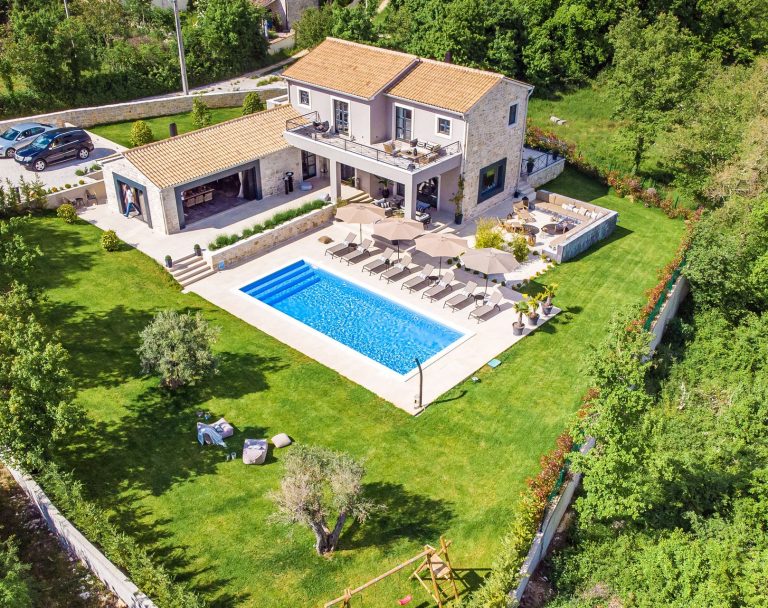
Buying a luxury villa on the Adriatic requires more than finding an attractive property with a swimming pool and sea views. While photographs may showcase a spacious terrace, elegant interiors, and proximity to the beach, the true value of a property depends on its location, legal documentation, construction quality, and long-term ownership costs.
Before making a decision, clearly define whether the villa will be used as a holiday home, a permanent residence, or a rental investment. The intended purpose will influence the ideal location, floor plan, level of privacy, and expected return on investment.
Choose the Location Based on How You Plan to Use the Villa
The best location is not necessarily the most famous one—it is the one that best suits your lifestyle and objectives. A beachfront villa may seem ideal, but before purchasing, consider the property’s accessibility, distance from shops, restaurants, healthcare facilities, the airport, and major transport routes. Choosing the right location can significantly affect the property’s future value.
If the villa is intended for private holidays, a peaceful setting, a secluded terrace, and a plot that protects your privacy from neighbours or passers-by may be your priorities. For holiday rentals, destinations with well-maintained beaches, excellent restaurants, and year-round amenities generally offer stronger rental potential.
Sea views should also be evaluated beyond the peak tourist season. An empty plot in front of the villa may be designated as building land, allowing future construction that could obstruct the view. It is therefore essential to review the local spatial development plan and any future building opportunities in the immediate area.
Review Ownership and Building Documentation
Proper legal documentation is one of the most important requirements for a secure property purchase. The Land Registry extract confirms ownership, registered encumbrances, and any rights that could limit the use or transfer of the property. These records should always be compared with the cadastral register and the property’s actual condition before signing a purchase agreement.
Verify that the property has a valid building permit, occupancy permit, and Energy Performance Certificate. Pay particular attention to any extensions or additions, such as extra bedrooms, outdoor kitchens, covered terraces, garages, swimming pools, or auxiliary buildings. The fact that these features appear in photographs or have been in use for years does not necessarily mean they have been legally registered.
For villas located directly on the coast, it is equally important to verify property boundaries, access roads, and any restrictions associated with Croatia’s maritime domain regulations.
Evaluate Construction Quality, Not Just Interior Design
Luxury furnishings can sometimes conceal construction defects that may result in significant repair costs later. An independent technical inspection should assess the structural integrity, waterproofing, roof, façade, electrical and plumbing installations, windows and doors, as well as heating and cooling systems.
Properties near the sea are constantly exposed to salt, humidity, and strong coastal winds. For this reason, it is important to examine the durability of exterior joinery, railings, metal components, and swimming pool equipment. Signs of dampness in the basement, cracks, unpleasant odours, or recently repainted walls may indicate underlying issues that require further investigation.
For modern villas, it is also advisable to inspect smart home systems, video surveillance, heat pumps, solar panels, and automatic irrigation systems. While these technologies enhance comfort, they also increase maintenance requirements and operating costs.
Make Sure the Layout Matches Your Needs
The number of bedrooms alone does not determine whether a villa is practical. Consider the size of each bedroom, the number of bathrooms, the connection between indoor and outdoor spaces, and the separation of private living areas from guest areas.
A villa intended for a larger family or holiday rentals should include sufficient storage, a laundry room, a functional kitchen, and a covered outdoor dining area. Bedrooms with en-suite bathrooms and effective sound insulation provide a higher level of comfort and privacy.
A swimming pool is a valuable feature, but its orientation, daily sunlight exposure, safety, and heating system should all be carefully evaluated. A terrace without shade throughout the day may be far less comfortable than it appears in promotional photographs.
Calculate the Total Cost of Ownership
The purchase price is only part of the overall investment. Buyers should also budget for taxes, legal fees, agency commissions, potential renovations, landscaping, furniture, and technical equipment.
Ongoing ownership costs typically include swimming pool and garden maintenance, cleaning, insurance, utilities, servicing technical systems, and property supervision during periods of vacancy. If the villa is intended as a rental investment, it is essential to realistically assess the length of the tourist season, achievable daily rental rates, management costs, and expected periods without guests.
Make Your Decision Only After Professional Due Diligence
A deposit should never be paid before the legal status, technical condition, and all terms of the transaction have been fully verified. The preliminary purchase agreement should clearly define the property being sold, the purchase price, payment schedule, completion deadlines, and the circumstances under which the deposit will be refunded.
A specialised agency such as Best Real Estate can help identify luxury villas that genuinely match your budget and intended use while coordinating communication with lawyers, surveyors, and construction experts. This ensures that your decision is based not only on impressive sea views, swimming pools, and attractive architecture, but also on verified property value, secure legal documentation, and construction quality that justifies your investment.